
Oulu Museum’s own archives include only little materials regarding northern Finland’s metal music history. Thus, the exhibition is built almost entirely communally; by borrowing archives, memories, and treasures of bands, musicians, and hobbyists.
The method is slow and arduous – one cannot recommend it – but it is the only way to uncover material that would otherwise be missing from museum environments. At the same time, it forces one to stop and ponder the essential question. With whose voice should this story be told? The exhibition must respectfully bear the voices that have truly lived in this culture.
Shared development and ideation with the community in question is necessary when it comes to Metallikausi. The exhibition does not only consist of items on shelves, but of human experiences. When the museum builds exhibitions on living identity cultures, it must consider its own role as a voice of the community. It is important that the presented message is recognizable and believable from the community’s perspective as well.
Metal music also includes features that may bring about misunderstandings or critical discussion from external sources. So, one needs to prepare ahead for questions and conflicting opinions. In shared development, all parties teach each other. When the process is done well, the community can proudly see themselves in the final result. The work is redeemed when the museum tells the story truthfully and with respect.
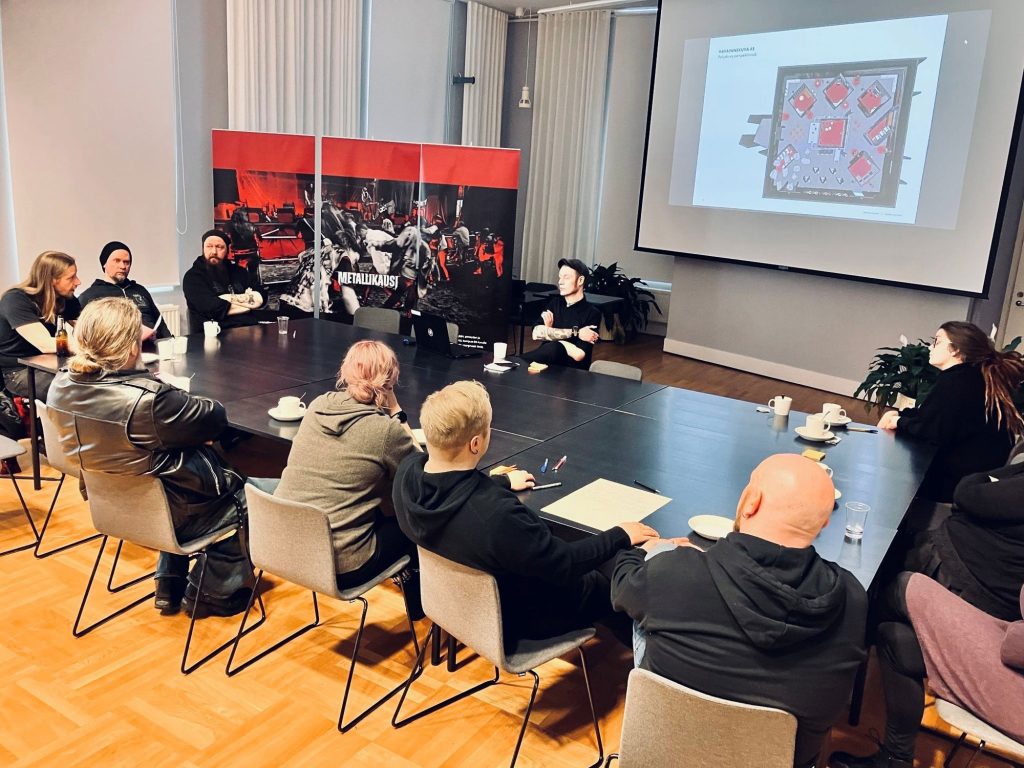
Shared development with the hobbyist community is necessary for Metallikausi.
Ideas in surprising places
The ideation group was formed from metal hobbyists, collectors, and musicians in Oulu with a low threshold. At the relaxed brainstorming sessions, many ideas were born. The first meeting was held in Snooker Time’s meeting room, and later meetings were held wherever possible. Shared discussion is the only way to find a throughline in topics such as this. Books, research, and autobiographies are important too, but they don’t meander enough to represent the topic’s fickleness.
The ideation continued with different themes. One of the latest meetings was held in the Varikko Brewery where the coming Metallikausi beer and its nuances were considered. The tasting and the tour were held by the amazing Milja, a long-time beer specialist who organizes themed tours under the name Maistatusmuikkeli (Fin. tasting woman). The brewery exemplified well how the ideation group operates. While discussing the product, the discussion continually returned to the exhibition’s atmosphere, communality, and what kind of experience the museum wants to offer.
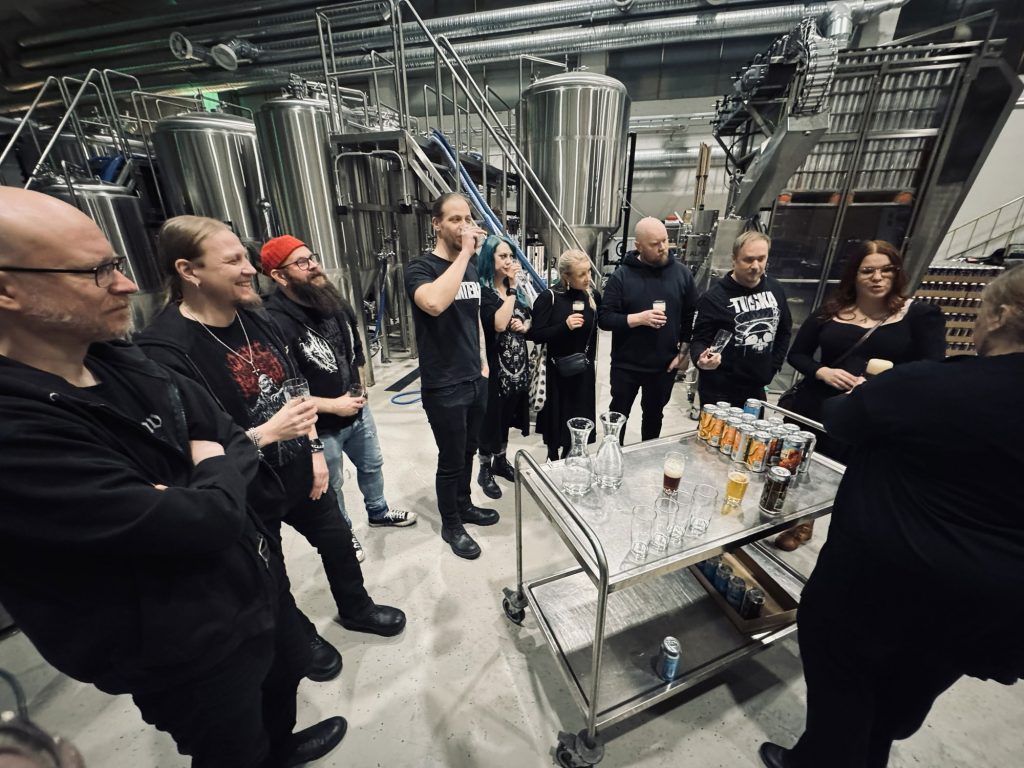
Varikko Brewery will produce a beer for the Metallikausi exhibition.
LEA AND ARI’S EXPERIENCES ON THE SHARED WORK
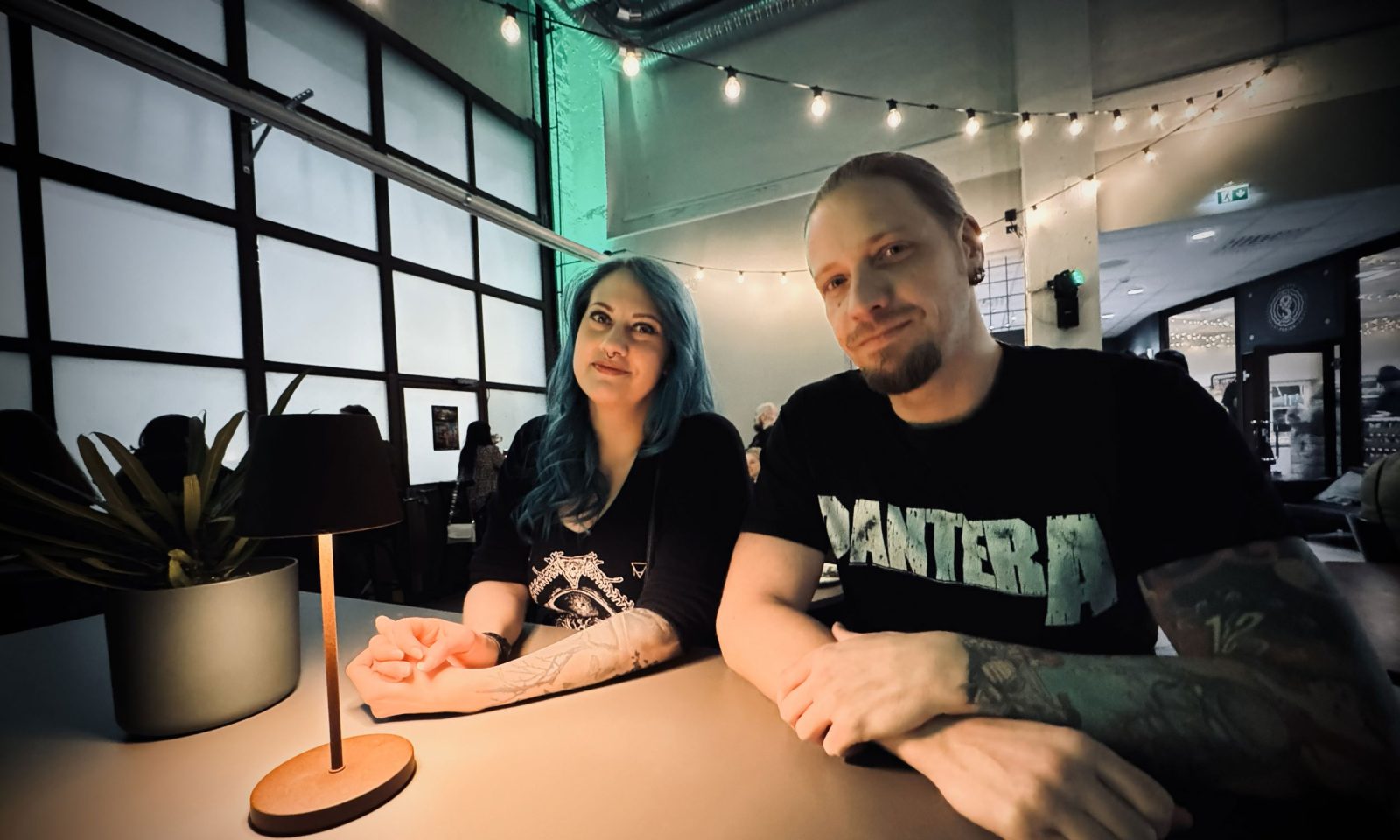
At the end of the idea meeting, I stopped to talk to two participants, Lea Saari and Ari Kokko. I asked them how they see the group’s significance and what museum work means to them.
Lea describes the ideation group, above all, as a place where the exhibition has been planned with an exceptionally open attitude. It has been important to her to be able to bring up ideas without limiting them with realism immediately. When you don’t have to consider limitations in the early stages, there is room for wilder ideas and safer space for expressing all ideas.
For Ari, the group’s age distribution is very essential as well. Participants of different ages have their own memories of the scene’s different phases – that makes the discussion fruitful. He was surprised to see how many of the early ideas progressed and became visible in the exhibition’s later design and even the blueprints. It made him feel that the ideation was not done just for the sake of coming up with ideas, but it was actual work in the right spirit. Ari also believes that the exhibition can inspire those who are not initially interested in metal music or do not understand the scale of the phenomenon.
When Lea and Ari consider the value of the ideation group to the museum, they emphasize the importance of inclusion in the scene. Lea believes that a person who does not follow the scene might not even know what to focus on. It is not just about facts, but about atmosphere, scale, and the spirit that defines what feels real in Oulu’s metal context and what does not. Ari describes shared thinking as a cultivating process. When matters are considered in a group, the memories and opinions of individual people become clearer as others supplement and highlight new details. Lea has observed the same thing. Chains of thought become clearer in cooperation, increasing perspective in comparison to producing a story only based on archived materials. Ari also emphasizes the conceptualization of development when it comes to eras. It is easier to see how things have changed together.
When the interview turns to what the exhibition must get right, they return to people. Ari believes that it is important to rectify the common impression of metal and the metal community. Even though the music is dark and aggressive, the community is very gentle and cheerful in his experience. Screaming and raging with the whole body at concerts is a way to release anxiety and anger in a safe way. Lea continues and highlights the communality and solidarity of the metal scene. From the outside, people often cannot see how those things glue the group together and what they can teach in everyday life. Even if you are a little bit different, you are always welcome to join. For many, it can be easier to be themselves at concerts and events.
Metallikausi is very concretely based on the community. It can be seen in the materials, stories, perspectives, and how the exhibition is built. The ideation group is not a sideshow, but one of the exhibition’s most important engines.
Metallikausi is a shared exhibition of the Oulu Museum and Science Centre Tietomaa. It will open on October 9, 2026, in Museum and Science Centre Tiima. Read more about Metallikausi here.
Text and pictures: Tuomas Niemelä